
You know that sustainability is incredibly important — perhaps now more than ever. And making sustainable choices, no matter how big or how small, can make a difference for our lives and the lives of future generations.
When it comes to building an outdoor living space, you want decking materials that are sustainable for the planet — but they also need to be beautiful and easy to maintain. And when it comes to your most sustainable decking material options, you may be surprised to know that wood doesn’t make the cut.
Finding sustainable decking alternatives to traditional wood is crucial for eco-conscious homeowners. With a focus on reducing environmental impact, options like recycled plastic decking and other innovative materials are becoming popular. This guide explores the most sustainable decking materials available today.
Why Consider Sustainable Decking?
Environmental concerns are pushing the demand for sustainable outdoor living. Traditional wood decking often contributes to deforestation. It also requires frequent maintenance with stains and sealants that can contain VOCs (volatile organic compounds). In contrast, eco-friendly decking materials offer durability, minimal upkeep, and a lower environmental footprint.

What are the Benefits of Eco-Friendly Decking?
- Contributes to your home’s eligibility for LEED certification which, in turn, can improve the resale value of your home
- No staining required, so no exposure to the potentially harmful chemicals often found in wood deck stains
- Helps contribute to a healthier planet for your family and future generations
- Less maintenance needs thanks to longer-lasting materials, which translates to less material making its way to landfills — and lower long-term costs, too
Now that you know the benefits of choosing a sustainable deck material, it’s time to see which material stands out as the best sustainable alternative to traditional wood decking.
Sustainable Deck Material Options
Your deck material options include different types of traditional wood as well as engineered decking alternatives like TimberTech Advanced PVC and Composite Decking. Your options vary significantly in terms of performance, aesthetics, cost, and, of course, which are the most sustainable decking material options.

TRADITIONAL WOOD
Pressure-Treated Lumber
Typically a softwood like pine that’s been infused with potentially harmful chemicals to make the wood somewhat resistant to moisture and weathering.

TRADITIONAL WOOD
Other Softwoods
Primarily cedar or redwood, which are only grown in certain climates. That means potentially greater fossil fuel consumption due to transportation.

TRADITIONAL WOOD
Hardwoods
Typically includes mahogany, Ipe, or teak, which are often grown in exotic climates, making sourcing difficult, costly, and unsustainable — not to mention fossil fuel consumption from transportation, and the damage caused to some of the world’s most precious ecosystems.

ENGINEERED DECKING
Capped Composite Decking
Made of a blend of recycled wood and recycled plastic fibers, protected with a fully engineered cap that locks color in and moisture out.
Plus, the wood fibers in TimberTech composite decking are 100% recycled, so no deforestation required.

ENGINEERED DECKING
Capped PVC Decking
Made with 100% high-performance polymers, a majority of which are derived from hard-to-recycle plastics. Plus, as a fully engineered material, TimberTech capped PVC decking is fully recyclable at the end of its (decades-long) lifespan.
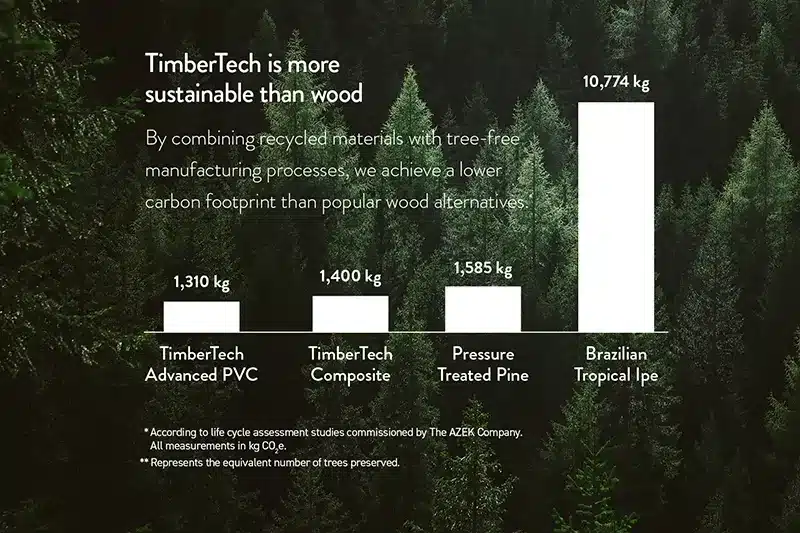
TimberTech is more sustainable than wood
By combining recycled materials with tree-free manufacturing processes, we achieve a lower carbon footprint than popular wood alternatives.*
*According to life cycle assessment studies commissioned by The AZEK Company. All measurements in kg CO2e.
How Do Composite Materials Stand Out Environmentally?
Most composite decking supports sustainable outdoor living:
- Lifespan and durability: Composite and PVC decks last longer than wood, reducing the frequency of replacements, thus saving resources in the long run
- Recycling initiatives: TimberTech has demonstrated a commitment to sustainability by diverting hundreds of millions of pounds of waste from landfills annually — and through their Full-Circle PVC Recycling program
- Low maintenance: Sustainable, composite decking needs less upkeep, leading to fewer chemical treatments and water usage compared to wood
How Can TimberTech Decking Drive Sustainable Choices?
TimberTech is leading the industry with its innovative, sustainable solutions:
- Closed-loop manufacturing: By using renewable energy and closed-loop water systems, TimberTech minimizes its environmental impact and sets a benchmark for others
- Full-Circle PVC Recycling: To help reduce waste at build sites, this program offers bins to collect PVC scraps that are then recycled and used in decking and exteriors products
- Company goals: With a goal of using one billion pounds of recycled material annually, TimberTech has saved more than four million trees since 2001 and exemplifies responsible business practices
- Awards and recognitions: TimberTech has been heralded by major publications for its sustainability initiatives, solidifying its position as a leader in eco-friendly decking options

What Trend Predictions Are Shaping Eco-Friendly Decking?
Recent trends indicate a growing inclination toward sustainable materials:
- Consumer awareness: Rising concern for the environment means homeowners increasingly prioritize sustainable choices — demanding real wood looks that are low-maintenance and eco-friendly
- Design innovations: Companies are continuously developing authentic new textures and finishes while maintaining sustainability
- Integration with smart technologies: Decks are being tailored to fit eco-friendly changes, like smart lighting and water systems, enhancing sustainable outdoor spaces
Making an Informed Choice: Sustainable vs. Traditional
Choosing sustainable decking materials from brands like TimberTech can significantly influence your environmental impact, without sacrificing quality or aesthetics. Compared to traditional wood, options like composite and recycled plastic decking reduce deforestation and waste while offering an alternative that’s both durable and attractive.
Frequently Asked Questions
Composite and PVC decking are made from a blend of materials that includes virgin and recycled polymers. This reduces the need for virgin materials and diverts waste that could otherwise be headed to oceans and landfills. Its durability also means fewer replacements over time, minimizing resource consumption. Additionally, many composite decking brands, like TimberTech, use eco-friendly manufacturing processes.
TimberTech stands out for its use of up to 100% recycled materials in its core products and its commitment to carbon-conscious manufacturing. The company also prioritizes waste reduction and offers products with extended lifespans, reducing environmental impact. Their transparency in sustainability practices further solidifies their leadership.
Sustainable decking materials can have a higher upfront cost compared to traditional wood. However, their longevity, low maintenance, and environmental benefits often outweigh the initial investment. Some options may also have limited color or style choices, depending on the brand.
Look for certifications like FSC (Forest Stewardship Council) or labels indicating recycled content. Research the manufacturer’s sustainability practices, including material sourcing and production methods. Transparent companies often share detailed environmental impact reports or eco-friendly commitments.